From Fan to Stalker: The Terrifyingly Short Distance Between Devotion and Doxxing
Nobody joins a fan community thinking they'll end up publishing a celebrity's home address on a Discord server. Nobody downloads a stan account app because they dream of coordinating a harassment campaign. And yet, here we are — in a world where the distance between "I love this person's music" and "I have mapped their daily jogging route" is measured not in miles but in group chat messages.
The fan-to-stalker pipeline is real, it is accelerating, and the most unsettling part? Most of the people inside it have absolutely no idea they're in it.
It Starts So Innocently It's Almost Cute
Ask anyone who's been deep in a fandom and they'll describe the early days with genuine warmth. You find your people. There's a shared language, a shared obsession, a sense of belonging that mainstream social life rarely delivers. You post reaction GIFs. You argue about eras. You trade blurry concert photos like they're baseball cards.
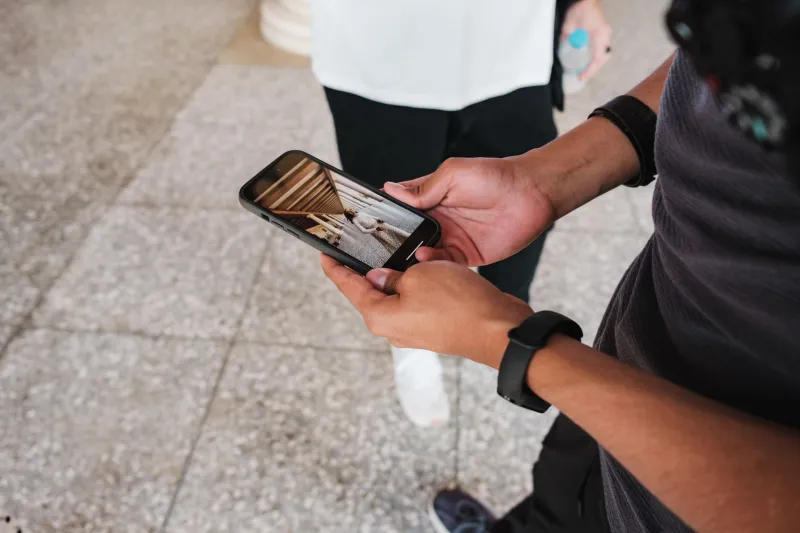
And then someone in the group chat notices something. A street sign reflected in a car window in the background of an Instagram story. A coffee cup sleeve with a logo that only three locations in Nashville carry. A hotel elevator door style that, according to one very dedicated member, matches a specific Marriott property in Midtown Manhattan.
This is where it gets interesting. And by interesting, we mean deeply alarming.
The "spotting" game — identifying where a celebrity is based on environmental clues — has become one of the most popular activities in dedicated fan communities. On the surface, it reads like a harmless puzzle. A fun little crowd-sourced Where's Waldo. Except Waldo didn't have a home address that could be published online if the wrong person got too invested.
The Psychology of the Escalation Nobody Notices
Here's the thing about the pipeline: it doesn't feel like a pipeline. It feels like a natural progression of enthusiasm.
Step one is passive consumption — you follow, you watch, you enjoy. Step two is active participation — you post, you engage, you contribute to community knowledge. Step three is what researchers sometimes call "deep fan investment," where your identity becomes meaningfully tied to the celebrity's public existence. And step four, the one nobody sees coming, is surveillance dressed up as devotion.
Dr. Pamela Rutledge, a media psychologist who has written extensively on parasocial relationships, describes this escalation as a function of community reinforcement. When a fan community rewards the person who finds the most clues, identifies the most locations, or compiles the most comprehensive timeline of a celebrity's movements, the behavior gets repeated and intensified. It's not malice. It's dopamine.
"The group dynamic is crucial," she's noted in interviews. "What would feel invasive if done alone feels collaborative and even virtuous when done collectively. You're contributing. You're valued. You're the one who cracked the code."
The problem is that the code, increasingly, is someone's private life.
Former Fans Describe Their Wake-Up Moments
We spoke with several people — all requesting anonymity, which, given the topic, felt appropriate — who described the moment they realized they'd crossed a line they hadn't noticed approaching.
One woman, a former member of a large K-pop fan community, described spending weeks helping compile what the group called a "schedule tracker" — a shared document logging a celebrity's known movements, flight patterns inferred from airport sightings, and neighborhood-level location data pieced together from background details in photos. "We called it a fan resource," she said. "I didn't think about what it actually was until someone in the group suggested we post it publicly so fans could 'accidentally' run into him. That's when I closed the laptop and just sat there."
Another former participant described a Reddit thread dedicated to identifying the exact apartment building where a television actress lived, based on the view visible through her window during a live stream. "People were genuinely proud," he said. "Like they'd won something. I upvoted it before I even processed what I was looking at."
The wake-up moment, in both cases, came not from internal moral reckoning but from external perspective — a friend outside the fandom asking a simple question: "Why do you need to know where she lives?"
Turns out that question is surprisingly hard to answer.
The Legal Gray Zone Where Fan 'Research' Lives
Here's where things get legally complicated, which is a polite way of saying: the law has not kept up with the internet, and everyone is suffering for it.
Doxxing — the publication of private identifying information about a person without their consent — is illegal in a growing number of states, including California, Texas, and New York. But the activity that precedes doxxing, the aggregation of publicly available information into a comprehensive surveillance profile, exists in a legal gray zone that is genuinely difficult to prosecute.
If a celebrity posts a photo from a coffee shop and you identify the coffee shop, that's not illegal. If you then identify the neighborhood, cross-reference it with a previous sighting, and contribute to a shared document tracking their daily patterns — also technically not illegal, in most jurisdictions, until and unless someone uses that information to show up, make contact, or publish it with harmful intent.
The problem, as attorneys who specialize in celebrity privacy cases have noted, is that harm doesn't require intent. A compiled location profile published in a fan forum can be accessed by someone with genuinely dangerous intentions who contributed nothing to its creation. The community builds the weapon. Someone else fires it.
California's anti-stalking statutes have been updated to address some of this, and federal law covers certain forms of cyberstalking. But enforcement is inconsistent, prosecution is rare, and by the time legal intervention becomes relevant, the damage is usually already done.
The Platform Problem Nobody Wants to Own
Social media platforms have complicated this picture in ways that are almost impressively irresponsible. Location tagging features, geotagged metadata in photos, and algorithmic amplification of "discovery" content all make the early stages of fan surveillance not just easy but actively encouraged by the platforms profiting from the engagement.
Twitter (now X), Instagram, and TikTok have all faced criticism for failing to adequately moderate coordinated fan harassment campaigns. The challenge, platforms argue, is that individual pieces of information — a location tag, a photo comment identifying a neighborhood, a reply noting someone's hotel — are not individually violating. The violation is in the aggregation, and no algorithm has yet been built to catch aggregation in real time across thousands of accounts.
Translation: the system is not designed to stop this. It is, if we're being honest, designed to facilitate it.
What Loving Someone From a Distance Actually Requires
Here's an uncomfortable truth that fan culture has been slow to reckon with: genuine admiration for a public figure includes respecting the boundary between their public persona and their private existence. The celebrity you love has chosen to share certain things. The address they didn't post, the route they didn't broadcast, the neighborhood they didn't tag — those are the things they chose not to share. Reconstructing them anyway isn't devotion. It's violation.
The most devoted fans, arguably, are the ones who understand that their favorite artist, actor, or athlete is a full human being entitled to move through the world without being tracked. Who engage with the work, not the whereabouts. Who recognize that the group chat asking "where is she right now" has stopped being a fan community and started being something considerably darker.
Nobody wants to believe they've crossed that line. Which is exactly why so many people cross it without looking down.