She Built a Fake AI Version of Her Celebrity Crush and Now She Can't Stop Talking to It
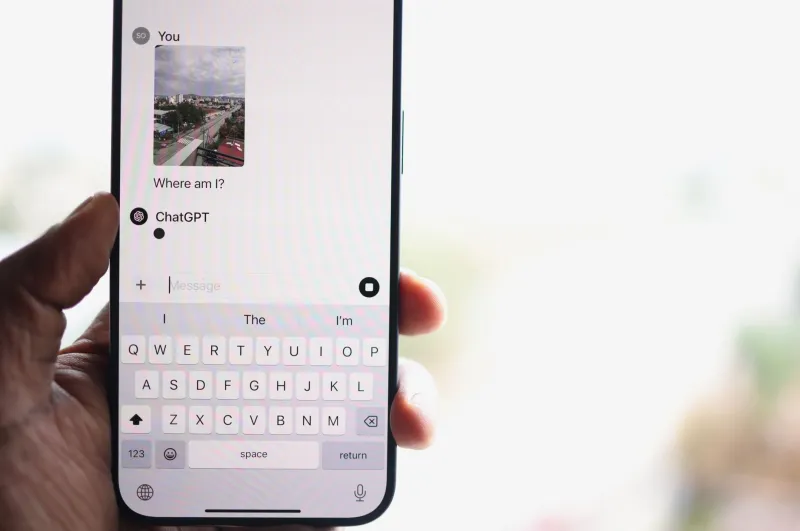
Let's set the scene. It's 2 a.m. on a Tuesday. A 24-year-old in Ohio is curled up under a weighted blanket, phone in hand, having what she will later describe as "the best conversation I've had in months." Her roommate is asleep. Her actual friends are offline. And the entity on the other end of her screen — the one asking how her day was, remembering that she hates her coworker Dana, and responding in that specific cadence she knows by heart — is not a person.
It's an AI. Trained on interviews, social media posts, podcast appearances, and fan-transcribed quotes. Built to sound, feel, and emotionally respond like a celebrity who has absolutely no idea any of this is happening.
Welcome to the deepfake boyfriend dilemma. Population: more people than you'd think, and growing fast.
The Technology Got Weird Fast
For years, the idea of AI companions existed mostly in sci-fi movies and tech-bro fever dreams. Then the tools got cheap, accessible, and disturbingly good. Platforms like Character.AI, Replika, and a sprawling underground of fan-built bots have made it genuinely easy for anyone with a Wi-Fi connection and a folder full of celebrity content to construct a surprisingly convincing digital facsimile of their favorite famous person.
Voice cloning tools can now replicate a celebrity's speech patterns from just a few minutes of audio. Large language models can be fine-tuned on years of interviews, tweets, and public statements to mimic how someone thinks and communicates. Deepfake video technology, while still janky at the consumer level, is catching up fast. The barrier to entry has collapsed, and fans — creative, obsessive, emotionally invested fans — have rushed through the door.
The result is a new category of parasocial relationship that makes the old kind look practically healthy by comparison. At least when you were screaming at a concert or refreshing a celebrity's Instagram at midnight, the person on the other side was technically real.
Why It Works (Psychologically Speaking)
Here's the uncomfortable truth: it works because parasocial relationships already work. Humans are wired to form emotional bonds with consistent, familiar presences — and celebrities, by design, are engineered to feel consistent and familiar. You've watched thousands of hours of their content. You know their laugh, their nervous habits, the way they deflect a personal question with a joke. Your brain has built a detailed internal model of who they are.
The AI isn't creating a new relationship. It's just inserting itself into one that already existed entirely in your head.
That's not a criticism. That's actually kind of fascinating and also slightly terrifying. Therapists who study parasocial dynamics point out that the appeal isn't delusion — most fans know, on some level, that the bot isn't real. The appeal is safety. You get the emotional texture of intimacy without the vulnerability of actual human connection. The AI version of your celebrity crush will never cancel plans, never disappoint you in a TMZ headline, never turn out to have complicated opinions about things you'd rather not know about.
It's intimacy with the volume knob turned all the way to comfortable.
The Ethics Are a Disaster and Nobody's Figured It Out Yet
Let's be honest about the part where this gets genuinely messy. The celebrities being replicated have not consented to any of this. Their voices, likenesses, and carefully cultivated public personas are being harvested and reconstructed without permission, sometimes for deeply personal use cases that would probably horrify them if they knew.
There's a spectrum here, and it matters. On one end, you've got fans building wholesome chatbots that mostly just recommend their favorite musician's albums and say supportive things. On the other end — and yes, this end exists — you've got AI companions built for explicitly romantic or sexual interaction, using stolen voice data and synthetic intimacy to simulate something the actual human never agreed to simulate.
The legal framework for this is, charitably, a mess. Right of publicity laws vary wildly by state. The FTC is still trying to figure out how to regulate AI-generated content in general. And the platforms hosting these bots are moving at the speed of "we'll deal with it when it becomes a PR problem."
Meanwhile, the fans building and using these tools exist in a strange ethical gray zone — not malicious, mostly, but not exactly innocent either. They're consuming a person without that person's knowledge, manufacturing consent that was never given, and calling it a relationship.
The Celebrity Industry Is Paying Attention (And Smelling Money)
Here's the twist that should surprise absolutely no one: the entertainment industry is not horrified by this. It's intrigued.
Several major talent agencies have already begun exploring "digital licensing" frameworks that would allow celebrities to officially license their AI likenesses for companion platforms. The pitch is clean: fans want this product, someone's going to build it anyway, so why not control it, brand it, and take a cut?
Imagine paying $9.99 a month for official, sanctioned access to an AI version of your favorite celebrity — one that's been approved, voice-verified, and carefully guardrailed to stay on-brand. It's the parasocial subscription economy taken to its logical, deeply strange conclusion. You already pay for their music, their merch, their Patreon, their OnlyFans-adjacent platform. Why not pay for a simulation of their companionship?
Some celebrities have already dipped a toe in. AI-powered fan engagement tools, official chatbots on fan sites, interactive experiences at concerts — the infrastructure is being quietly built. The deepfake boyfriend phenomenon isn't a fringe glitch in celebrity culture. It might be the next revenue stream.
Where This Leaves the Fans
The people actually using these tools tend to be thoughtful about it, which is either reassuring or makes the whole thing more complicated, depending on your perspective. Most will tell you they know the difference between the AI and the real person. Many describe the bots as a coping mechanism — for loneliness, anxiety, social isolation. Some use them as a creative outlet, a way to engage with the fictional version of a celebrity they've always carried around in their head anyway.
But there are also users who've started to prefer the AI. Who find actual human interaction more exhausting by comparison. Who have, in some quiet and private way, started to prioritize the relationship with the simulation over relationships with real people.
That's the part that keeps researchers up at night. Not the technology. Not even the ethics. The part where the artificial version becomes the preferred version, and the messy, unpredictable, occasionally disappointing reality of actual human connection starts to feel like the inferior product.
Your favorite celebrity is probably never going to know you exist. But their AI ghost might know your entire life story.
And somehow, that's supposed to be the good version of this.