When the Fan Becomes the Girlfriend: The Deeply Weird Power Trip of Celebrities Dating Their Own Stans

Photo by Photo by Colin Lloyd on Unsplash on Unsplash
Let's set the scene. You've spent three years learning every lyric, tracking every tour date, and building a parasocial bond so intimate you genuinely believe you understand this person in a way their publicist never could. And then — against all statistical probability — they notice you. They slide into your DMs. They pull you out of the crowd. Suddenly, the fantasy isn't a fantasy anymore.
Congratulations. You've won the fan lottery. Now buckle up, because this particular jackpot has a historically catastrophic payout rate.
The celebrity-dates-superfan story is as old as the velvet rope itself. But in the age of social media, where the distance between idol and admirer has been algorithmically collapsed to almost nothing, these relationships are happening more visibly, more frequently, and more disastrously than ever before. And the wreckage they leave behind raises some genuinely uncomfortable questions about power, delusion, and what exactly we think we're signing up for when we hand our hearts to someone who exists, for most of us, as a carefully curated image on a screen.
The Fantasy Doesn't Come With a Disclaimer
Here's the thing about parasocial relationships that nobody puts in the terms and conditions: they're built entirely on one-sided information. You know their coffee order (they mentioned it in a 2019 interview), their childhood trauma (discussed at length on a podcast), and their deeply specific opinions about hotel pillows (Instagram Story, deleted but screenshotted). They know nothing about you, because until approximately ten minutes ago, you were part of an undifferentiated mass of people holding up phone flashlights at a stadium show.
That asymmetry doesn't magically disappear when someone swipes right or sends a flirtatious reply to your fan account comment. It just gets weirder and more complicated.
Relationship therapists who work with clients in entertainment-adjacent circles have noted a consistent pattern: fans who enter romantic relationships with their idols often struggle to separate the real person from the constructed persona they fell in love with first. "The fan has, in effect, been in a relationship with a character," explains one New York-based therapist who works with entertainment industry clients. "When the actual human shows up — with bad moods, contradictory opinions, and a total lack of interest in being your parasocial fantasy made flesh — it's a profound disorientation."
That's a polite way of saying: things get messy fast.
The Power Gap Is the Size of a Stadium
Set aside the psychological complexity for a second and consider the raw structural dynamics at play. One person in this relationship has fame, money, an army of devoted supporters, and a professional team dedicated to protecting their image. The other person has... their feelings, and a fan account with 4,000 followers.
This isn't a partnership. It's a transaction with extremely unclear terms.
High-profile examples of this dynamic playing out have ranged from the merely uncomfortable to the genuinely alarming. When things go wrong — and they tend to — the celebrity retreats behind their PR apparatus while the former superfan is left to process the implosion publicly, often with their own fan community watching in real time. The social media pile-on that follows a messy celebrity breakup is brutal under any circumstances, but when the dumped party is also a known fan? The cruelty gets exponentially more creative.
There's also the uncomfortable question of how these connections get initiated in the first place. The celebrity has access to the fan's entire documented emotional history — their public declarations of devotion, their creative output inspired by their idol, their vulnerabilities broadcast across years of parasocial investment. The fan, meanwhile, is working from a highlight reel. That's not a level playing field. That's not even the same sport.
When the Rest of the Fandom Finds Out
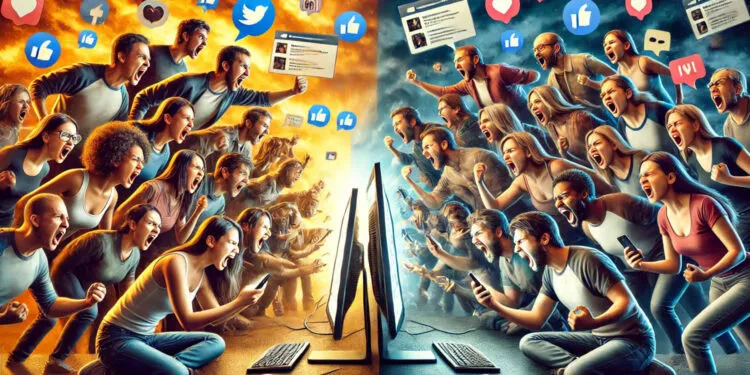
If you think the couple at the center of this situation has it complicated, spare a thought for the wider fanbase watching from the outside. The moment a celebrity publicly couples up with someone from their own fan community, the remaining stans enter a psychological state that can only be described as "collectively losing it."
Jealousy is the obvious part. But it goes deeper than that. For fans who have built their identity around their devotion to this person, watching someone from their own ranks ascend to actual girlfriend or boyfriend status forces an uncomfortable confrontation with the nature of parasocial investment. Suddenly the fantasy has a face. And that face belongs to someone who was, until recently, just like them.
Some fans respond with vindictive fury directed at the new partner. Others redirect that energy into increasingly baroque conspiracy theories about whether the relationship is even real (a PR stunt, obviously). A smaller but notable contingent quietly reassesses their entire relationship with fandom itself, which is honestly the healthiest possible outcome but also the least entertaining one.
The Collapse, and What Comes After
These relationships do occasionally survive. There are genuine, lasting partnerships that began with one party being a devoted fan. Love is weird and human connection is unpredictable and we're not here to be completely cynical about it.
But the failure rate is striking, and the aftermath tends to follow a predictable script. The celebrity moves on, possibly to another fan or possibly to someone safely outside the ecosystem entirely. The former partner is left holding the pieces of a relationship that was always fundamentally unequal, trying to grieve something that the public either romanticizes as a fairy tale gone wrong or mocks as a cautionary tale about knowing your lane.
What rarely gets discussed is the specific grief of losing not just a relationship but an idol. When the person you dated was also the person whose poster was on your wall, the breakup doesn't just cost you a boyfriend or girlfriend. It costs you the version of them you fell in love with years before they ever knew your name. You have to mourn two people simultaneously: the real one who left, and the imaginary one who never existed.
That's a particular kind of emotional tax that nobody in the entertainment industry is rushing to acknowledge.
So Why Does It Keep Happening?
Because celebrities are human, and humans are drawn to people who adore them unconditionally. Because the parasocial pipeline has made fans more accessible, more visible, and — from a certain angle — more appealing than ever. Because someone who has catalogued your every public statement and memorized your discography is, in a specific and slightly unnerving way, extremely attentive.
And because the fantasy is genuinely seductive for both parties. The fan gets the impossible thing they wanted. The celebrity gets someone whose devotion feels, at least initially, completely uncomplicated.
It's only later — when the human complexity asserts itself, when the power imbalance becomes impossible to ignore, when the rest of the fandom starts sending unhinged messages to the new partner's mom — that the full cost of the arrangement becomes clear.
The fairy tale was always a story someone else was telling. The people living it are usually just trying to figure out how to get out of the castle without anyone filming it.