Stan Wars: The Vicious Fandom Infighting That's Making the Internet a Genuinely Terrifying Place
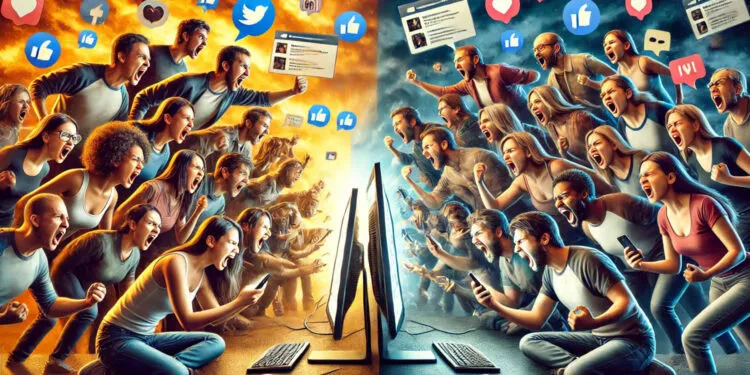
Photo: online community conflict social media argument fan groups, via sp-ao.shortpixel.ai
There is a particular kind of chaos that only fan communities can generate — a specific, high-velocity, deeply personal brand of conflict that makes ordinary internet arguments look like a polite disagreement at a homeowners' association meeting. It has its own vocabulary, its own rules of engagement, its own scorched-earth logic. And it has been escalating, quietly and consistently, for years.
We're talking about the fandom civil wars. The internal schisms, the shipping battles, the canon debates that somehow end in doxxing. The subfaction hierarchies so byzantine they'd make a medieval European court look like a relaxed book club. The harassment campaigns launched not against the celebrity at the center of the fandom, but against other fans who simply disagree about which fictional pairing is more emotionally valid.
This is what fan culture looks like in 2024 in a lot of corners of the internet. And almost nobody in the celebrity world is saying a single word about it.
From Squee to Siege Warfare
To understand how we got here, you have to remember what fan communities used to feel like — or at least what they were supposed to feel like. The early Tumblr era, for all its chaos, had a certain anarchic warmth to it. You showed up, you posted your feelings about a TV show or a musician, someone reblogged it with seventeen tags that were basically a paragraph of unprocessed emotion, and you felt understood. It was messy and weird and deeply sincere.
That's still out there. It exists. But alongside it, something harder and meaner has grown up.
Moderation volunteers in major fan communities — the people who spend their unpaid hours trying to keep Discord servers and subreddits from turning into active warzones — describe a shift that accelerated around 2017 and 2018 and hasn't really slowed down since. The introduction of Twitter's retweet mechanics, the algorithmic amplification of outrage, and the increasing monetization of fan content all contributed to an environment where conflict generates engagement and engagement generates power within a community.
In other words: fighting became a career move.
"There used to be a culture of 'don't like, don't read,'" one longtime moderator of a major TV show fan community told us, asking to remain anonymous because — and this is telling — they were worried about retaliation from members of their own fandom. "Now it's 'if you don't agree with my interpretation of this character, you are a bad person and I will make sure everyone knows it.'"
Shipping Wars: Ground Zero
If you want to understand fandom conflict at its most concentrated, you start with shipping — the practice of imagining romantic or relationship pairings between characters, cast members, or public figures. Shipping is one of the oldest and most creative traditions in fan culture, and it has produced genuinely extraordinary works of fiction, art, and cultural analysis.
It has also produced some of the most sustained harassment campaigns the internet has ever seen.
The pattern is consistent enough that it has its own internal logic. A major property — a TV show, a film franchise, a K-pop group — generates multiple possible romantic pairings. Fan communities form around competing ships. Each community develops an identity built partially around not being the other community. The conflict escalates from playful rivalry to genuine hostility. And then, somewhere along the way, the actual humans involved — actors, musicians, writers — become collateral damage.
Actors who have publicly supported one fan pairing over another have received coordinated harassment from the opposing faction. Writers who have canonized a relationship that one portion of the fandom opposed have had their personal information posted online. This is not a hypothetical. This has happened, repeatedly, across properties ranging from Supernatural to the Marvel Cinematic Universe to virtually every major K-pop act with a large Western following.
The Gatekeeping Hierarchy Problem
Shipping wars are the most visible form of fan conflict, but they're far from the only one. Equally destructive — and significantly less discussed — is the internal hierarchy problem that plagues almost every large fandom.
Every major fan community develops a status structure, whether it means to or not. The people who've been around longest, who produce the most content, who have the most followers, who've attended the most events — these individuals accumulate social capital within the community. And with social capital comes the ability to define what "real" fandom looks like.
Gatekeeping, in other words. The insistence that certain types of fans are more legitimate than others. That casual fans don't deserve to participate in conversations. That fans who came in after a particular cultural moment are somehow less authentic. That your specific interpretation of a celebrity or character is the correct one, and anyone who disagrees is either ignorant or malicious.
This is genuinely exhausting for the people on the receiving end of it, and it drives away exactly the kind of thoughtful, creative participants that make fan communities worth being in.
"I've been a fan of this artist for six years," one fan told us, describing their experience in a community around a major pop star. "And I still get told I'm not a 'real' fan because I don't agree that [a specific fan theory] is definitely true. At some point I had to ask myself why I was spending time in a space that made me feel worse about something I love."
The Celebrity Silence Question
Here's the part that makes this a celebrity story and not just an internet story: the people at the center of these fan communities — the celebrities, the actors, the musicians — are almost universally silent about the conflict happening in their name.
Sometimes that silence is understandable. Celebrities who wade into fandom disputes tend to make them dramatically worse. There's essentially no version of a famous person publicly commenting on a shipping war that doesn't immediately generate a tsunami of drama that consumes everything else.
But silence isn't neutral, either. When a celebrity watches their fan community harass a writer, or pile onto a fellow fan for a heterodox opinion, or send coordinated abuse to an actor who didn't support the "right" pairing — and says nothing — that silence gets interpreted as permission. Or at minimum, as indifference.
A small number of celebrities have pushed back. Pedro Pascal has made fairly clear that he finds certain parasocial intensities uncomfortable. Several K-pop artists have issued direct statements asking fans to stop fighting each other, with limited but real effect. These interventions matter, even when they don't fully work.
The majority, though, say nothing. Their teams say nothing. The conflict continues, the community fractures further, and the only people paying any real price are the fans themselves.
Is There a Way Back?
People who study online communities — and there are more of them than you'd expect — tend to be cautiously optimistic about the possibility of fan culture finding its way back to something healthier. The conditions that created the current toxicity (algorithmic amplification, engagement-based monetization, the collapse of moderation infrastructure) are not permanent features of the internet. They're design choices, and design choices can be changed.
In the meantime, the moderators and longtime community members who are still trying to hold fan spaces together are doing genuinely difficult, genuinely thankless work. They're writing community guidelines and enforcing them at personal cost. They're building smaller, more intentional spaces where conflict is managed before it goes nuclear. They're, in many cases, the last line of defense between a fan community and total implosion.
They deserve more credit than they get. From fans, from platform companies, and from the celebrities whose names are on the door of the communities they're trying to keep livable.
Because here's the thing about fandom civil wars: nobody wins them. The community fractures. The joy that brought everyone there in the first place gets buried under years of accumulated grievance. And the celebrity at the center of it all keeps posting Instagrams and cashing checks, completely untouched.
Your obsession shouldn't cost you your sanity. That's not what any of this was supposed to be.