From Superfan to Served: The Brutal Legal Timeline of Getting Banned From a Celebrity's Universe
Let's set the scene. You've driven past someone's house fourteen times in a week. You've sent 400 emails explaining that the two of you share a spiritual connection. You've shown up to three separate public appearances holding a handmade sign that says, in glitter glue, "I Know You Feel This Too." At what point does the celebrity's legal team stop laughing nervously and start making phone calls?
Faster than you'd probably like to hear.
Welcome to the restraining order pipeline — a surprisingly well-oiled legal machine that exists almost entirely because fame, parasocial attachment, and the internet have combined into a volatile cocktail that occasionally shows up uninvited at a gated community in Calabasas.
What Actually Triggers the Legal Machine
Not every overzealous fan ends up with a court order stapled to their front door. The law, for better or worse, requires a specific flavor of behavior before it gets involved. "The threshold is credible threat or harassment," explains one Los Angeles-based attorney who has handled celebrity protection cases for over a decade and asked to remain anonymous because, as she put it, "I don't need my own stalker." "It's not enough to be annoying. It has to rise to the level of causing genuine fear or constituting repeated unwanted contact."
In plain English: thinking about a celebrity obsessively is not illegal. Telling them about it repeatedly, showing up where they live, or making contact after being told to stop — that's where the law starts paying attention.
California, which hosts a disproportionate share of the famous, has some of the most robust celebrity protection statutes in the country. The state's Civil Harassment Restraining Order process was essentially stress-tested by Hollywood. Other entertainment hubs — New York, Nashville, Atlanta — have their own frameworks, but California's is widely considered the gold standard for speed and scope.
The Timeline: From Incident to Injunction
Here's where things get genuinely alarming for anyone who thinks the legal system moves slowly. In acute situations, it doesn't.
Day Zero: The incident occurs. Maybe it's a confrontation outside a studio. Maybe it's the fifteenth DM in a row after being blocked. Maybe security footage catches someone scaling a perimeter fence at 2 a.m. This gets documented immediately by the celebrity's security team — and yes, they are absolutely keeping receipts.
Day One to Three: The celebrity's attorney files for a Temporary Restraining Order (TRO). In California, this can be done on an emergency basis without the other party present. A judge reviews the petition — which includes a detailed declaration of the threatening behavior — and if the threat seems credible, signs the TRO the same day. The order typically goes into effect immediately.
"People are always surprised by how fast a TRO can happen," says a celebrity security consultant who has worked with Grammy-winning artists and A-list actors. "You can go from 'incident reported' to 'you are legally prohibited from coming within 100 yards of this person' in under 48 hours."
Day Three to Twenty-One: The fan — now technically a respondent — gets served with the TRO and a notice of a hearing. This is the moment the paperwork arrives at their door, and by all accounts, it tends to produce a fairly significant reality check.
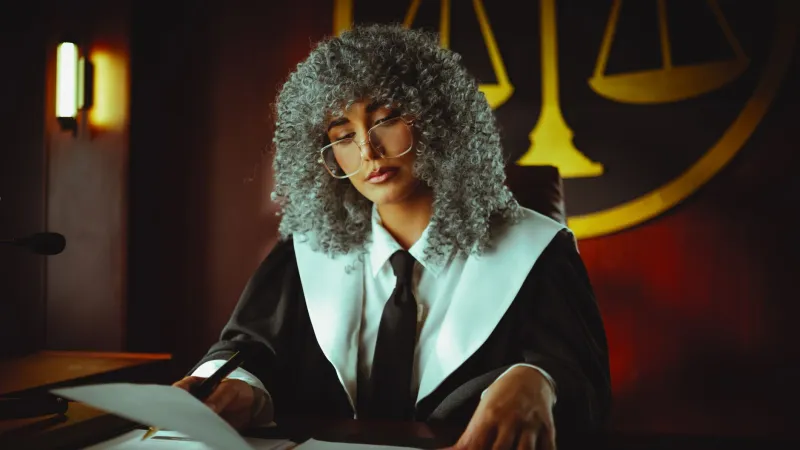
The Hearing (Usually Within 21 Days): Both parties appear before a judge. The fan gets to present their side. The celebrity or their representative presents evidence. If the judge finds sufficient cause, the TRO converts into a permanent restraining order — which in California can last up to five years and is renewable.
Violate it? That's a criminal matter. We're talking fines, potential jail time, and a criminal record that will follow you considerably longer than your fixation on someone who doesn't know your name.
The Evidence Pile Is Bigger Than You Think
One thing fans consistently underestimate is how thoroughly celebrity security teams document unwanted contact. It's not just the dramatic stuff — the fence-scaling, the confrontations. It's the emails. The social media messages sent from seventeen different accounts after getting blocked. The gifts sent to management offices. The forum posts geotagged two blocks from someone's house.
"By the time we're filing," the attorney told us, "we usually have a binder. Sometimes two binders. The pattern of behavior is documented going back months, sometimes years. Courts respond to patterns."
This is the part where it becomes genuinely uncomfortable to think about: a lot of behavior that fans consider normal — enthusiastic, even loving — reads very differently in a legal declaration. The line between "dedicated" and "defendant" is not always where people assume it is.
When the Fan Realizes What They've Become
People who work in celebrity security describe a remarkably consistent reaction when respondents are served: shock, followed by denial, followed by a very belated reassessment of their own behavior.
"The most common thing I hear from people on the other side of these cases is that they genuinely didn't think what they were doing was wrong," says the security consultant. "They thought they were expressing love. They thought the celebrity would eventually understand. The restraining order is often the first time someone has used the word 'threatening' in connection with what they were doing, and it lands hard."
Therapists who specialize in parasocial attachment — yes, this is a real and growing specialty — note that the legal intervention, while jarring, occasionally functions as the kind of external shock that breaks through what had become a consuming delusion. "For some people, getting served is the thing that finally gets them into therapy," one practitioner noted in a recent psychology journal piece on celebrity obsession. "It's a harsh intervention, but sometimes it's the only one that works."
The Geography of Getting Banned
It's worth noting that restraining orders aren't one-size-fits-all. The distance requirements vary. The scope varies. Some orders cover residences and workplaces. Some extend to family members. Some prohibit any contact by any means — including that burner Instagram account you think no one knows about. (They know.)
And in an era where a celebrity's location can be triangulated from a background detail in a Story, courts have begun taking digital contact and online behavior increasingly seriously as components of harassment patterns.
The Takeaway (Please Read This One)
Look, FanStalker is not in the business of telling you how to feel about your favorite celebrity. Love them. Stream them. Buy the merch. Cry at the concerts. That's what we're all here for.
But there is a version of fandom that stops being fandom and starts being something that ends with a process server ringing your doorbell — and the legal machinery designed to handle that situation is considerably faster and more thorough than most people realize.
The courts have seen the binders. They are not charmed by the glitter glue sign.
Stay obsessed. Stay legal. There's a meaningful difference.