Your Feelings Are Someone's Business Plan: Inside the Billion-Dollar Fan Economy
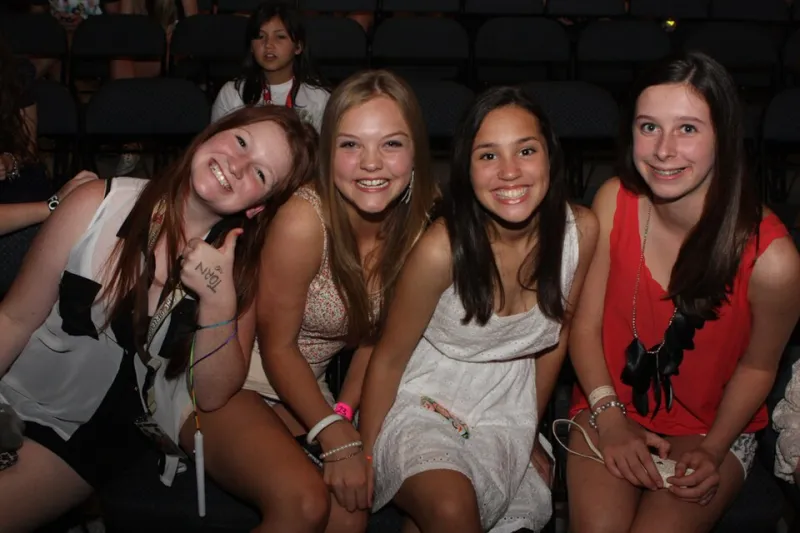
Photo: Eva Rinaldi, CC BY-SA 2.0, via Wikimedia Commons
Let's set the scene. It's 2 a.m. You're refreshing a celebrity's Instagram story for the fourth time. You've bought the vinyl, the hoodie, the signed lithograph, and the "exclusive" digital bundle that came with a 30-second voice memo of your favorite artist saying your name — well, a name, probably not yours specifically. You've spent somewhere north of $800 this quarter on someone who doesn't know you exist.
Congratulations. You are the engine of a multi-billion dollar machine, and honestly? The machine thinks you're doing great.
The fan economy — that sprawling, pulsating financial universe built entirely on parasocial devotion — has quietly become one of the most lucrative sectors in American entertainment. And it didn't happen by accident.
From Bedroom Posters to Business Models
Fandom has always had a commercial dimension. Teen girls bought Beatles records. Trekkies funded conventions. But somewhere between the rise of social media and the pandemic-era loneliness spiral, something fundamentally shifted. Fans stopped being passive consumers and became active economic participants — stakeholders, almost, in the celebrity brands they loved.
The difference now is architecture. Platforms like Patreon, OnlyFans (yes, celebrities use it too, relax), Cameo, and a growing constellation of fan-club subscription apps have built entire infrastructures designed to monetize the emotional gap between fan and star. That gap — the aching, beautiful, slightly embarrassing space where parasocial attachment lives — turns out to be extraordinarily profitable real estate.
According to a 2023 report by Goldman Sachs, the creator economy alone is projected to reach $480 billion by 2027. And that's before you factor in merchandise, live experiences, NFT drops, and the increasingly surreal world of celebrity-affiliated Discord servers where paying $29.99 a month gets you the privilege of chatting with other fans while a social media manager posts on the star's behalf.
The Psychology of "Close Enough"
Here's the uncomfortable truth that nobody in the fan economy wants you to think too hard about: parasocial relationships are psychologically real, even when they're commercially manufactured.
Dr. Pamela Rutledge, a media psychologist who has written extensively on fan behavior, describes parasocial bonds as the brain doing exactly what it evolved to do — forming social connections based on repeated exposure and perceived intimacy. When a celebrity shares their morning routine, cries on a livestream, or answers fan questions with what feels like genuine warmth, your brain files that under "relationship." It doesn't particularly care that the exchange is one-directional.
Savvy celebrity teams know this. The entire business model of tiered fan access is built on engineering moments that feel personal without actually being personal. A $200 "superfan" tier might get you a birthday shoutout and a monthly Q&A. A $500 tier adds a "private" newsletter written in first person. At the top end, some celebrities are offering virtual dinners, personalized video calls, and limited "inner circle" memberships that can run into the thousands annually.
None of this is inherently sinister. But it does raise a question worth sitting with: at what point does monetizing human connection tip from smart business into something a little more predatory?
The NFT Detour and What It Taught Everyone
Remember celebrity NFTs? Of course you do, because some of you spent real money on them and we are not here to make you feel bad about that — okay, maybe a little.
The NFT boom of 2021-2022 was essentially a stress test for how far fan loyalty could be stretched in the name of "exclusive digital ownership." Celebrities from Paris Hilton to Tom Brady launched NFT collections promising community access, real-world perks, and the vague thrill of owning something nobody could take from you (except the blockchain could, and the market did).
When the crypto winter arrived and most celebrity NFT projects collapsed in value, it revealed something important: fans will pay for connection, but they resent paying for connection that turns out to be hollow. The backlash was swift and instructive. Stars who leaned too hard into the financial transaction without delivering genuine intimacy lost credibility they haven't fully recovered.
The lesson the smarter corners of the industry took away? The product isn't the merch or the token. The product is the feeling. And feelings require upkeep.
Merch That Means Something (And Merch That Doesn't)
Celebrity merchandise has always existed, but the current era has bifurcated it sharply. On one end, you have the cynical cash-grabs — generic hoodies with a name slapped on them, sold through pop-up Shopify stores that appear during album rollout season and vanish just as fast. Fans are increasingly good at sniffing these out and publicly roasting them, which is its own form of fan participation, honestly.
On the other end, you have merchandise as genuine cultural artifact. Think of the way Taylor Swift's Eras Tour merchandise became a secondary economy unto itself, with fans reselling, trading, and collecting items with the intensity of vintage sneakerheads. Or how Bad Bunny's merch drops routinely sell out in minutes because they're designed with actual aesthetic care and cultural specificity that resonates with his fanbase.
The difference is authorship and intentionality. Fans can tell when a celebrity is genuinely involved in what they're selling versus when they've simply licensed their likeness to a fulfillment company. And they vote with their wallets accordingly.
So Is This the Evolution of Fandom, or Its Exploitation?
Honest answer: probably both, depending on who's running the show.
The fan economy at its best creates genuine community, funds artists directly, and gives fans a sense of agency and participation in something they love. Platforms like Bandcamp (before the acquisition drama), small-run fan club memberships, and artist-run Patreons have genuinely democratized the relationship between creators and their audiences in meaningful ways.
At its worst, the fan economy is a sophisticated emotional extraction machine that identifies your most vulnerable attachment points and charges you a subscription fee to access them. The line between those two things is not always obvious, and it shifts constantly.
What's clear is that fans themselves are getting more sophisticated. The same communities that spend thousands on their favorite stars are also the ones publishing detailed financial analyses of celebrity business ventures, organizing boycotts when they feel manipulated, and building their own counter-economies through fan-made content and peer-to-peer trading.
In other words: the machine created to profit from fan devotion is increasingly being interrogated — and occasionally dismantled — by the fans themselves.
Your obsession is someone's business plan. But you're starting to read the fine print. And that, at least, is something.